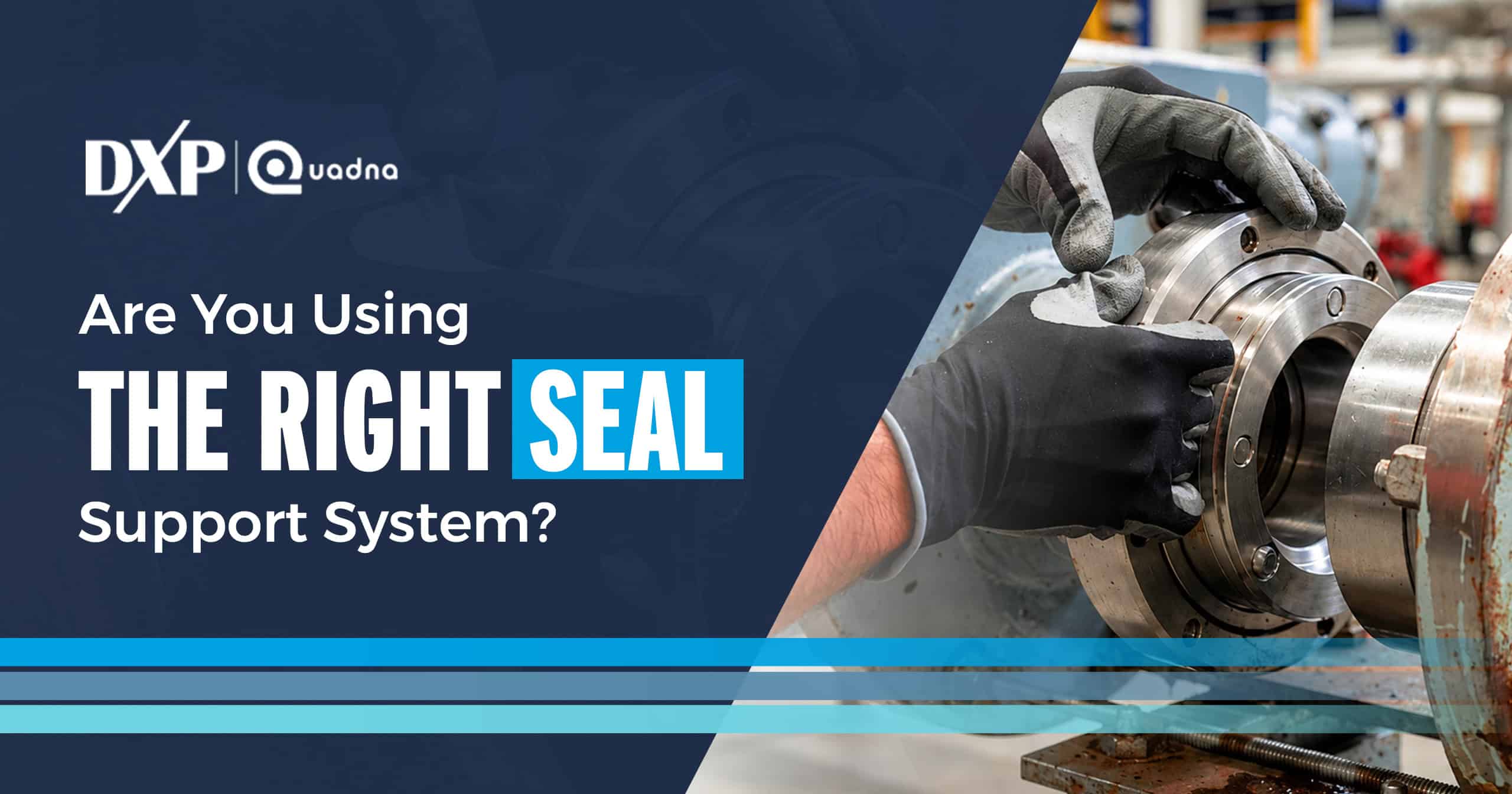
Mechanical seals are among the most critical components in an industrial pump, yet their performance depends heavily on the environment surrounding the seal faces. Heat, pressure changes and difficult process fluids can shorten seal life even when the seal itself is properly selected. In demanding applications, a well-designed seal support system can provide the conditions necessary for reliable operation.
At DXP Quadna, seal support is evaluated as part of the complete pumping system. Choosing the appropriate plan can reduce premature failures, improve safety and help facilities get longer service life from their mechanical seals.
Why Mechanical Seals Need Support
Mechanical seal faces operate with extremely small clearances. A thin fluid film provides lubrication and helps control heat generated by friction. When process conditions interfere with that film, seal performance can deteriorate rapidly.
For example, fluids containing solids may accumulate around the seal faces. High temperatures can cause flashing, while changes in pressure may disrupt lubrication. Some process fluids can crystallize or become more viscous as conditions change.
Seal support systems help create a more stable environment. Depending on the application, they can provide cooling, maintain pressure or introduce a cleaner fluid around the seal. The objective is to protect the seal faces from conditions that would otherwise accelerate wear.
Understanding Common Seal Support Plans
Seal support arrangements are commonly defined through standardized API piping plans. The appropriate plan depends on the pump, seal configuration and process conditions.
A relatively simple arrangement may recirculate process fluid from the pump discharge through the seal chamber. This approach can help remove heat while maintaining circulation around the seal faces. Other applications require an external flush using a clean compatible fluid, particularly when the process fluid contains abrasive solids or contaminants.
More demanding services may use dual mechanical seals supported by a buffer or barrier fluid system. A buffer system generally operates below process pressure, while a pressurized barrier system maintains pressure above the process fluid. These arrangements provide additional separation between the process and atmosphere, making them valuable when leakage or contamination presents a significant concern.
Matching the Plan to the Process
There is no universal seal support plan that works for every pump. Selection begins with understanding the process fluid and how it behaves under actual operating conditions.
Temperature is especially important because excessive heat can damage seal faces and secondary sealing elements. Pressure must also be considered to maintain stable conditions within the seal chamber. For fluids containing solids, the support system may need to prevent particles from accumulating around critical sealing surfaces.
The consequences of leakage should influence the decision as well. Applications involving hazardous or environmentally sensitive fluids may justify more sophisticated containment and monitoring than general water service.
Installation and Monitoring Matter
Even a properly selected support plan can underperform if it is installed incorrectly. Piping should be arranged to promote reliable circulation without introducing unnecessary restrictions. Instrumentation should also be positioned so operators can easily monitor critical conditions.
Once the system is operating, changes in pressure, temperature or fluid condition can provide early indications of developing problems. Routine inspection of the support system should therefore be incorporated into the facility’s broader pump maintenance program.
Building Better Seal Reliability
Recurring mechanical seal failures should not automatically be treated as a problem with the seal. In many cases, the operating environment is the underlying cause. A properly engineered support system can improve that environment and help the seal perform as intended.
DXP Quadna works with customers to evaluate pump applications, mechanical seal requirements and operating conditions to identify appropriate seal support solutions. If your facility is experiencing recurring seal failures or operating pumps in demanding service, contact DXP Quadna to discuss strategies for improving seal reliability and equipment performance.