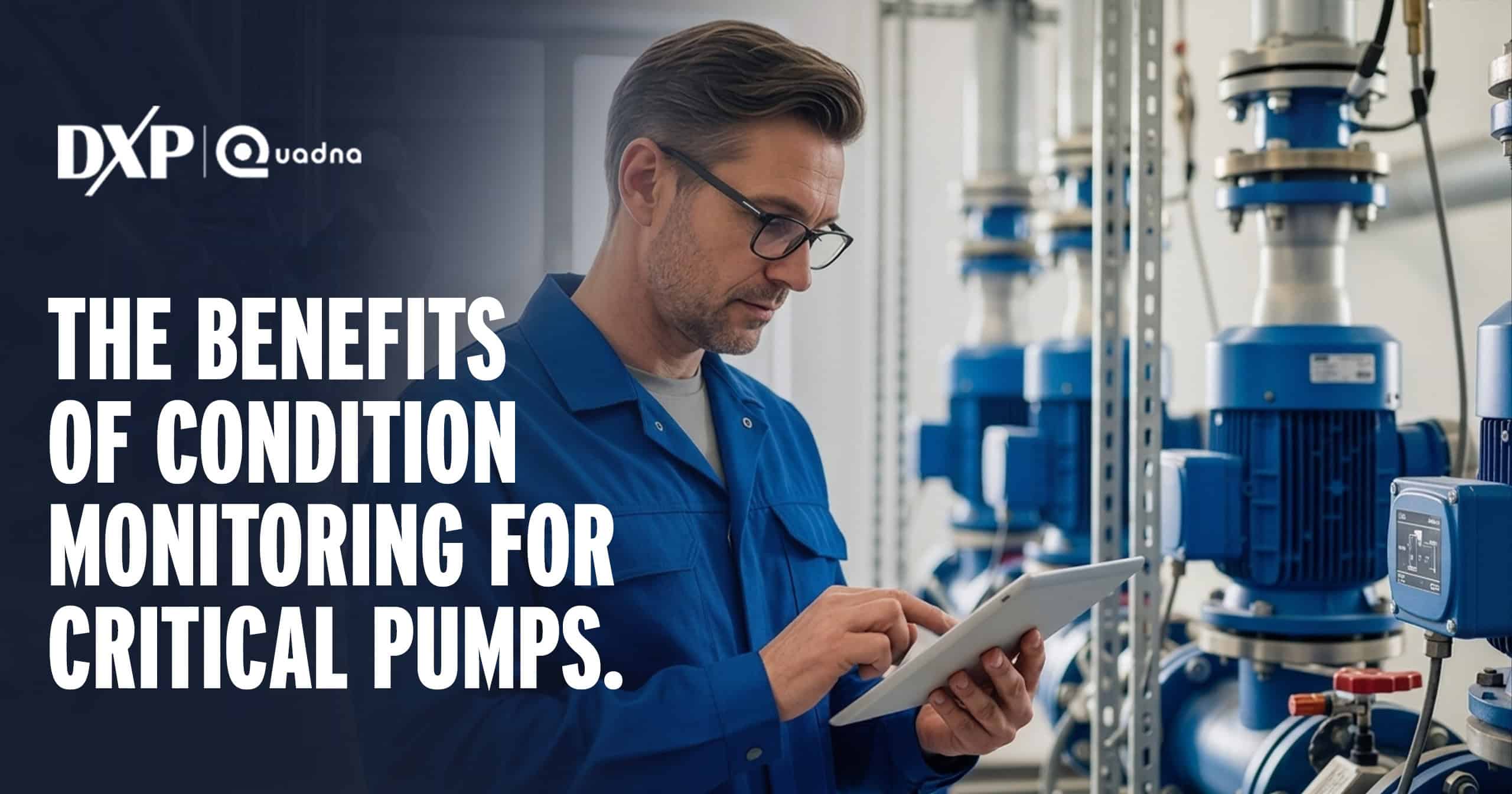
For many industrial facilities, critical pumps are essential to maintaining production. An unexpected failure can halt operations, increase maintenance costs and create costly downtime. Traditional maintenance programs often rely on fixed service intervals or reactive repairs after problems occur. While these approaches have their place, they may not identify developing issues before equipment performance is affected.
Condition monitoring provides a more proactive strategy. By continuously tracking the health of critical pump systems, facilities can identify potential failures early, schedule maintenance more effectively and extend equipment life. At DXP Arizona, condition monitoring is an important part of building reliable pump systems that support long-term operational performance.
Detecting Problems Before They Become Failures
Most pump failures develop gradually rather than occurring without warning. Bearings begin to wear, alignment shifts slightly or hydraulic conditions change over time. These issues often produce measurable changes in equipment performance long before a breakdown occurs.
Condition monitoring uses sensors and instrumentation to track these changes while the pump remains in service. Instead of waiting for equipment to fail, maintenance teams gain early insight into developing problems and can respond before they become major repairs.
This proactive approach reduces unplanned downtime while allowing maintenance to be scheduled around production requirements.
The Value of Vibration Monitoring
Vibration is one of the most useful indicators of pump health. Increases in vibration often point to issues such as misalignment, bearing wear, imbalance or cavitation. Because these problems affect equipment differently, vibration analysis can help maintenance teams narrow down potential causes before disassembly begins.
Monitoring vibration trends over time provides valuable information about equipment condition. A gradual increase may indicate normal wear, while sudden changes often signal a developing mechanical or hydraulic problem that requires immediate attention.
Identifying these issues early helps prevent secondary damage to seals, couplings and other rotating components.
Temperature Monitoring Supports Reliability
Temperature is another key indicator of pump performance. Bearings, mechanical seals and motors naturally generate heat during operation, but abnormal temperature increases often reveal developing problems.
Rising bearing temperatures may indicate lubrication issues or excessive mechanical loading. Higher seal temperatures can point to improper cooling, excessive friction or seal wear. Monitoring these conditions allows maintenance teams to investigate potential issues before they result in equipment failure.
Temperature data becomes even more valuable when combined with vibration and performance information, providing a more complete picture of overall system health.
Performance Monitoring Improves Decision-Making
In addition to mechanical condition, monitoring overall pump performance helps identify efficiency losses that may otherwise go unnoticed. Changes in flow, pressure, power consumption or operating speed can reveal internal wear, system restrictions or changing process conditions.
By comparing actual performance with expected operating values, facilities can determine whether maintenance is necessary or whether system adjustments may improve efficiency.
Performance monitoring also helps verify the results of repairs and upgrades, ensuring that equipment returns to its intended operating condition.
Building a Predictive Maintenance Strategy
Condition monitoring is most effective when integrated into a broader reliability program. Data collected from sensors can be used alongside inspections, maintenance history and operating records to support informed decision-making.
Rather than replacing components on a fixed schedule, maintenance teams can prioritize work based on actual equipment condition. This reduces unnecessary maintenance while minimizing the risk of unexpected failures.
DXP Arizona helps facilities implement condition monitoring solutions that integrate with existing control systems and maintenance programs. From sensor selection and instrumentation to system evaluations and field support, our team helps customers make better decisions based on real operating data.
If your operation depends on critical pump systems, contact DXP Arizona to learn how condition monitoring can improve reliability, reduce downtime and extend equipment life.