Industrial pump systems can account for a significant portion of a facility’s energy use, particularly when equipment operates continuously or for extended periods. Unfortunately, pumps may consume more energy than necessary without creating an obvious operational problem. The system still delivers flow, but inefficiencies quietly increase operating costs.
Evaluating pump energy consumption provides an opportunity to uncover these hidden losses. By comparing energy use with actual system requirements, facilities can identify where improvements may deliver meaningful savings. DXP Arizona helps customers evaluate complete pump systems to find opportunities for greater efficiency without compromising process performance or reliability.
Start with Actual Operating Conditions
An energy evaluation should begin by understanding how the pump actually operates rather than relying solely on original design specifications. Process demands can change considerably over the life of a system. A pump selected years ago for one operating condition may now be serving a very different process.
Measurements of flow and pressure can help determine the pump’s current operating point. Comparing this information with the pump performance curve provides insight into how closely the equipment is operating to its best efficiency point.
A pump operating far from this range may still meet production requirements, but it can consume excessive energy while experiencing additional hydraulic stress.
Measure Energy Use
Electrical measurements provide another important part of the evaluation. Tracking motor power consumption establishes how much energy the pump system actually uses under normal conditions.
This information becomes more useful when viewed over time. A gradual increase in power consumption without a corresponding increase in production can indicate declining efficiency. Internal wear or changes elsewhere in the system may be forcing the pump to work harder.
Facilities can also compare similar pumps or operating periods to establish benchmarks. Significant differences may reveal equipment that deserves closer evaluation.
Look Beyond the Pump
High energy consumption does not necessarily mean the pump itself is the problem. System conditions frequently create inefficiencies that increase the amount of power required to move fluid.
Restricted piping can create excessive friction losses. Partially closed valves may be used to control an oversized pump, effectively wasting energy by generating pressure only to dissipate it through throttling. Changes to the process can also leave pumps operating at conditions they were never selected to handle efficiently.
Evaluating the complete system helps determine whether the solution involves the pump, the piping or the operating strategy.
Identify Opportunities for Improvement
Once the source of energy loss is understood, facilities can evaluate potential improvements. An oversized pump may benefit from an impeller modification or replacement with equipment better matched to current demand.
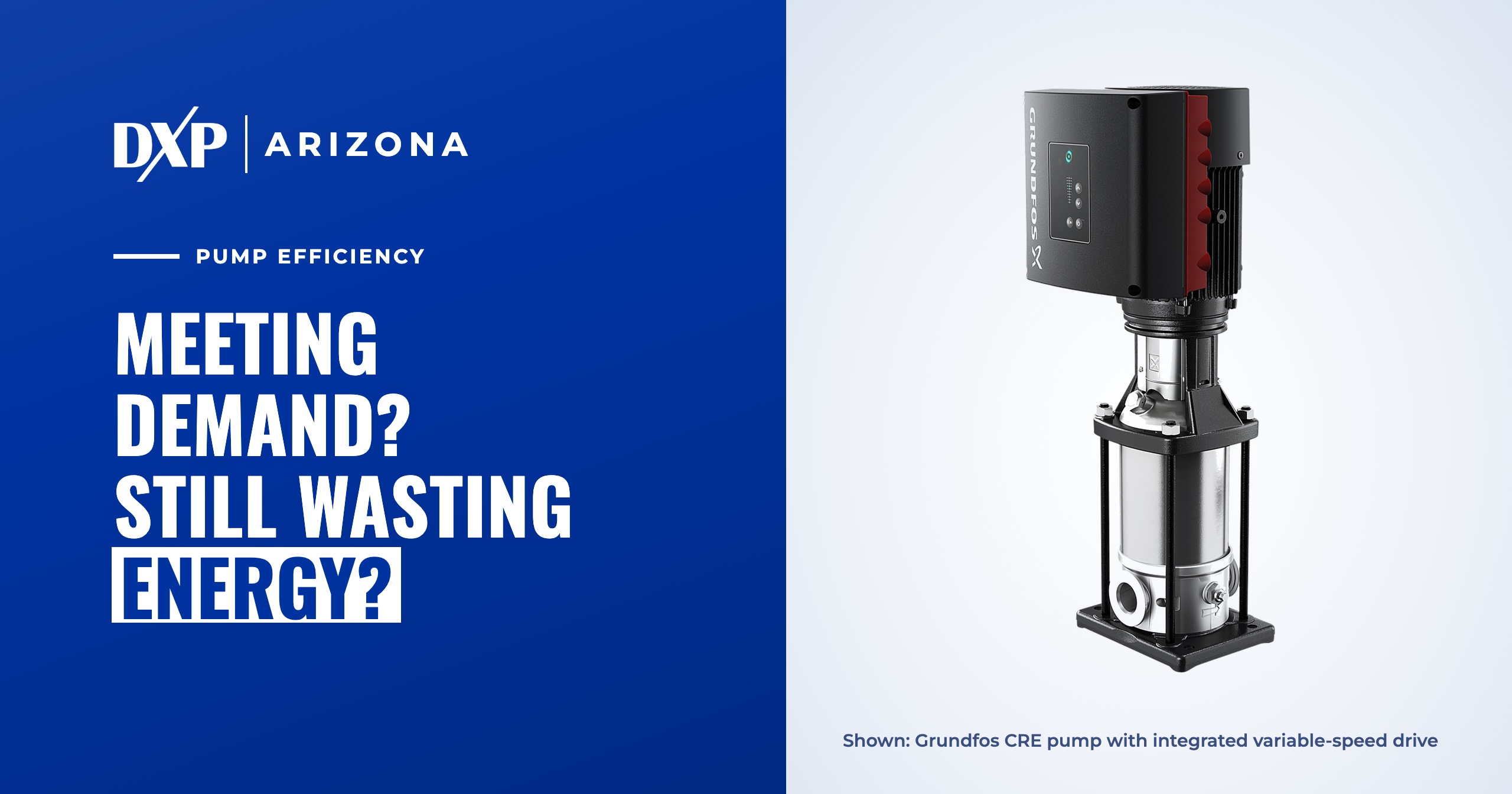
Variable frequency drives can provide substantial benefits in applications with changing flow requirements. Instead of running continuously at full speed and restricting output, the pump can adjust its speed to meet actual demand.
System modifications may provide savings as well. Reducing unnecessary piping restrictions can lower the head the pump must overcome. Restoring worn internal components may also recover hydraulic efficiency that has gradually been lost.
The best solution depends on the application, which is why energy improvements should be evaluated alongside reliability and process requirements.
Turning Energy Data into Long-Term Savings
A pump energy assessment should provide more than a snapshot of current power consumption. Establishing baseline performance makes it possible to track efficiency over time and recognize when operating conditions begin to change.
Regular monitoring can also help facilities verify whether efficiency projects are delivering the expected results. This turns energy management into an ongoing reliability strategy rather than a one-time exercise.
DXP Arizona works with customers to evaluate pump performance and identify practical opportunities for system optimization. If your facility is experiencing rising energy costs or wants to better understand how efficiently its pumps are operating, contact DXP Arizona at (800) 533-9710 to discuss strategies for improving performance and reducing long-term energy consumption.