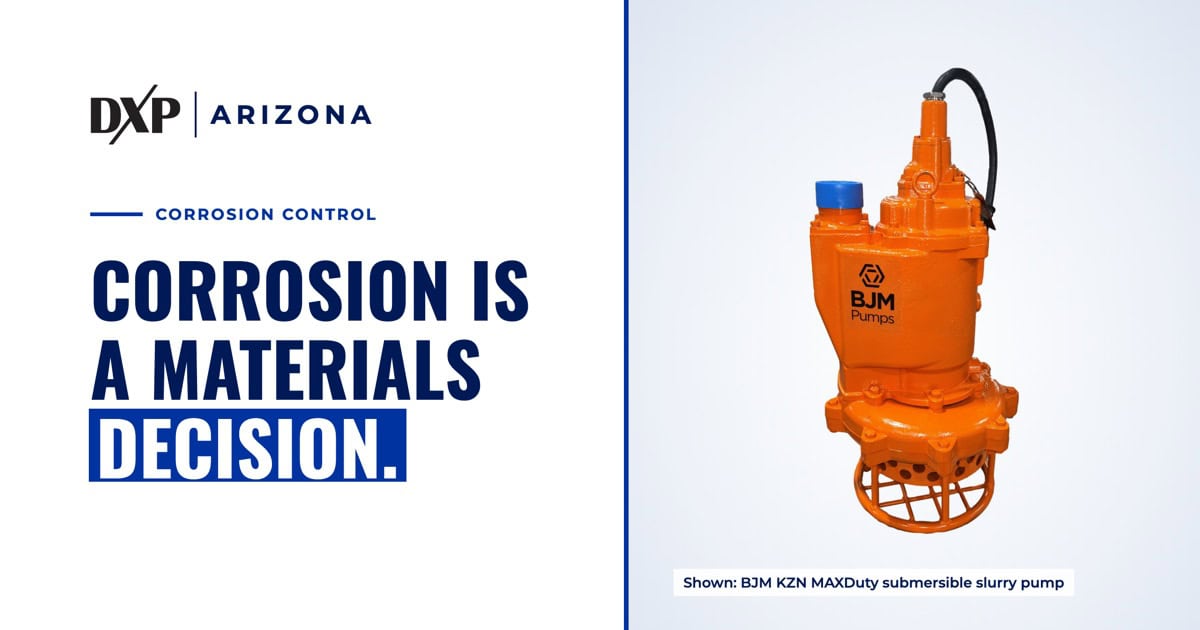
Wastewater pumps work in some of the most corrosive conditions industrial equipment faces. Hydrogen sulfide, chlorides, abrasive solids, shifting pH and biological activity all attack pump components. When materials and coatings don’t match the service, corrosion in wastewater pumping leads to early failures, unplanned downtime and rising maintenance costs.
Corrosion control affects reliability, regulatory compliance and total cost of ownership. DXP Arizona works with municipalities and industrial facilities to design pump systems that hold up in these conditions from installation through long-term operation.
Understanding Corrosion in Wastewater Pumping Systems
Corrosion in these systems takes several forms: uniform material loss, pitting, crevice corrosion and microbiologically influenced corrosion (MIC). It tends to speed up in lift stations, digesters, sludge handling systems and force mains, where anaerobic conditions are common.
Left alone, corrosion weakens structural parts, degrades hydraulic performance and raises the chance of seal and bearing failures. To select a pump for wastewater service, you have to evaluate both the chemistry of the fluid and the physical load on the wetted components, including the mechanical seals.
Material Selection for Corrosion Resistance
Base material choice is one of the most effective ways to control corrosion. DXP Arizona helps evaluate metallurgy based on fluid composition, solids content and operating conditions. Common options include:
- Cast iron with corrosion-resistant coatings for general wastewater transfer
- Stainless steel alloys for better resistance to pitting and chemical attack
- Duplex and super duplex stainless steels for high-chloride or aggressive service
- High-chrome iron for combined abrasion and corrosion resistance in sludge handling
The right material depends on the pump system and its operating conditions. The aim is to balance corrosion resistance, mechanical strength and lifecycle cost while staying compatible with the application. For solids-heavy service, see our guide to pump material selection for abrasive applications.
Protective Coatings and Surface Treatments
Corrosion-resistant alloys still benefit from added protection in wastewater service. A coating puts a barrier between pump surfaces and corrosive fluids, which slows degradation and helps preserve hydraulic efficiency. Effective options often include:
- Epoxy coatings to protect cast and ductile iron surfaces
- Ceramic-filled coatings to resist abrasion and chemical exposure
- Elastomeric linings for flexibility and impact resistance in solids-laden flows
- Anti-MIC coatings designed to limit bacteria-induced corrosion
A coating performs only as well as the surface preparation and application behind it. DXP Arizona selects and applies coatings to meet both the service conditions and the manufacturer’s specifications.
Designing for Longevity and Maintainability
System design also plays a large part in corrosion control. Proper hydraulic sizing, controlled flow velocities and reduced turbulence limit corrosive wear. Seal selection, shaft protection and bearing isolation cut down how much of the pump the aggressive fluid reaches.
DXP Arizona supports wastewater facilities across the equipment lifecycle with application engineering, coating evaluation, retrofit planning and field service. When operators address corrosion early, they reduce emergency repairs, extend service intervals and avoid costly downtime.
Planning for Wastewater Reliability
Every wastewater pump will see some corrosion. With the right materials, coatings and engineering support, those pumps can still deliver years of dependable service in harsh conditions. For an example of DXP Arizona’s work in wastewater, read our Lower Pinal Creek Wastewater Treatment Plant case study.
If corrosion is shortening the life of your wastewater or process pumps, contact DXP Arizona at (800) 533-9710 to discuss materials, coatings and pump solutions for your application.