Industrial facilities are becoming increasingly automated as manufacturers seek greater efficiency, consistency and visibility into their operations. While automation often focuses on production equipment and process controls, pump systems play a critical role in achieving these goals. Pumps are responsible for moving water, chemicals, slurries and other process fluids throughout a facility, making them an essential part of the overall control strategy.
At DXP Quadna, we help customers design pump systems that integrate seamlessly with modern automation platforms. By connecting pumps with PLCs, sensors and plant-wide control systems, facilities gain greater control over performance while improving reliability and efficiency.
The Role of PLCs in Pump Operation
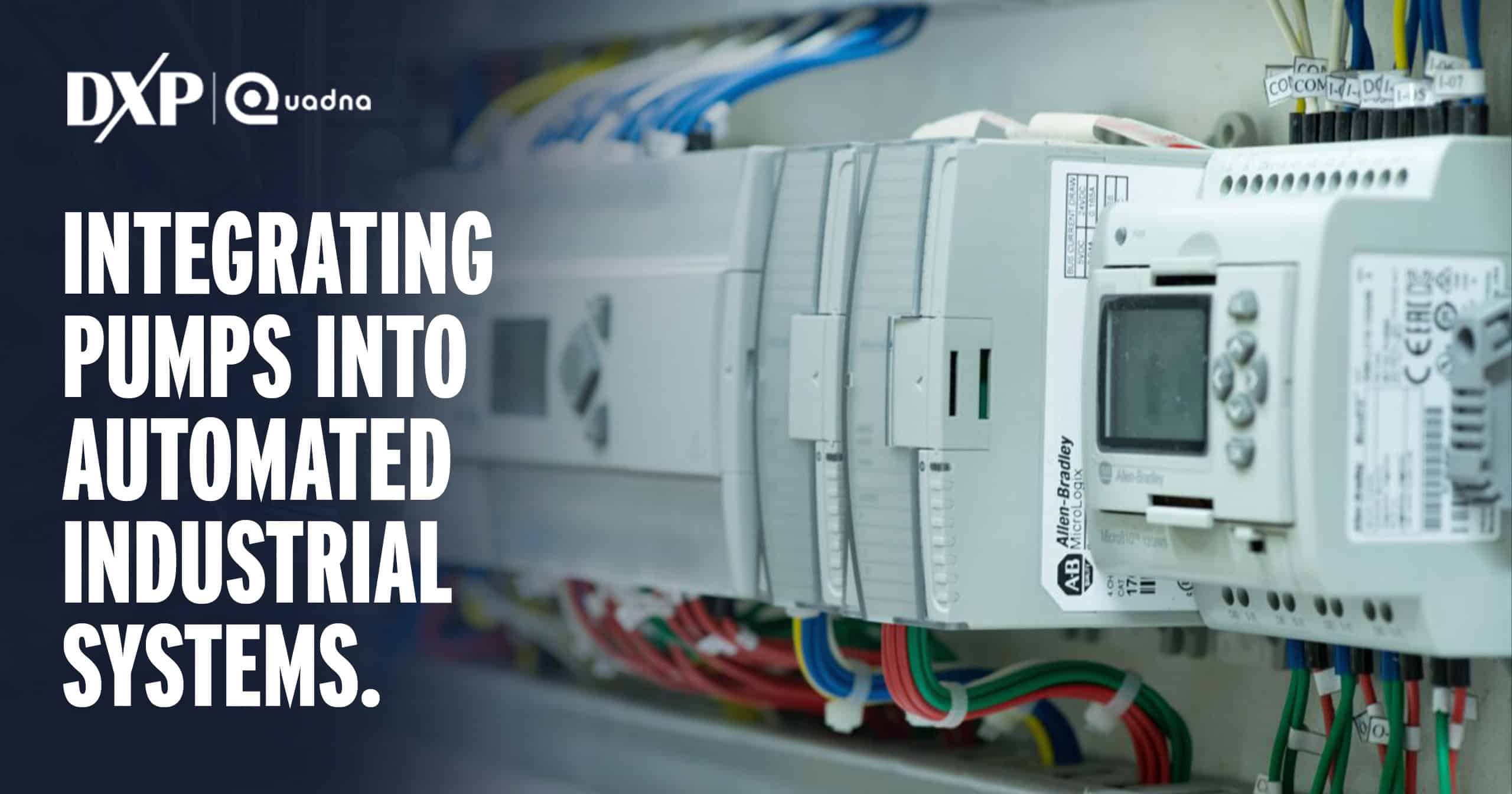
Programmable Logic Controllers (PLCs) serve as the central decision-making platform for many automated systems. Rather than operating independently, pumps can be integrated into PLC-controlled processes that adjust performance based on real-time conditions.
A PLC can start or stop pumps based on tank levels, pressure requirements or process demand. It can also manage pump sequencing in multi-pump systems, ensuring that equipment operates efficiently while balancing runtime across multiple units.
This level of automation reduces the need for manual intervention and allows systems to respond more quickly to changing operating conditions. Instead of running continuously at a fixed output, pumps can become part of a coordinated process designed around actual system requirements.
How Sensors Improve Visibility
Automation depends on accurate information, and sensors provide the data that makes intelligent control possible. Flow meters, pressure transmitters, level sensors and temperature monitoring devices continuously measure system conditions and communicate those values to the PLC.
These inputs allow operators to see exactly how the system is performing in real time. If flow begins to decline or pressure moves outside expected limits, corrective action can occur automatically. In many cases, the control system can adjust pump speed or operating sequences before performance issues become significant.
Sensors also support reliability initiatives. Monitoring vibration, temperature and operating trends helps maintenance teams identify developing problems before they result in equipment failures.
Plant-Wide Integration and Control
Modern facilities increasingly rely on centralized control systems that connect multiple processes across the operation. Through SCADA platforms and other plant-wide monitoring systems, pump performance can be viewed alongside other production metrics.
This broader visibility provides several advantages. Operators can monitor multiple pump stations from a single location, review historical performance data and identify trends that may affect efficiency or reliability. Alarm notifications can be configured to alert personnel when conditions move outside acceptable ranges, allowing for faster response and reduced downtime.
Integration also supports reporting and compliance requirements by providing documented operating data that can be reviewed and analyzed over time.
Improving Efficiency Through Automation
Automation does more than improve visibility. It can also significantly improve energy efficiency. Variable frequency drives integrated with PLC controls allow pumps to adjust speed based on real-time demand rather than operating at a constant output.
This capability helps pumps remain closer to their best efficiency point while reducing unnecessary energy consumption. Automated controls can also prevent excessive cycling, reduce hydraulic shock and improve overall equipment life.
As facilities pursue greater operational efficiency, the combination of intelligent controls and properly engineered pump systems becomes increasingly valuable.
Building Smarter Pump Systems
Successful automation requires more than connecting equipment to a control panel. Pumps, controls and instrumentation must be designed as an integrated system. Communication protocols, control logic and operating requirements all need to work together to support the process.
DXP Quadna works with customers to design and implement custom pump systems that integrate with modern automation platforms. From skid-mounted systems and VFD integration to PLC programming support and instrumentation selection, our team helps facilities build smarter, more responsive operations.
If your facility is looking to improve process control, visibility or efficiency, contact DXP Quadna to discuss pump system solutions designed for automated industrial environments.