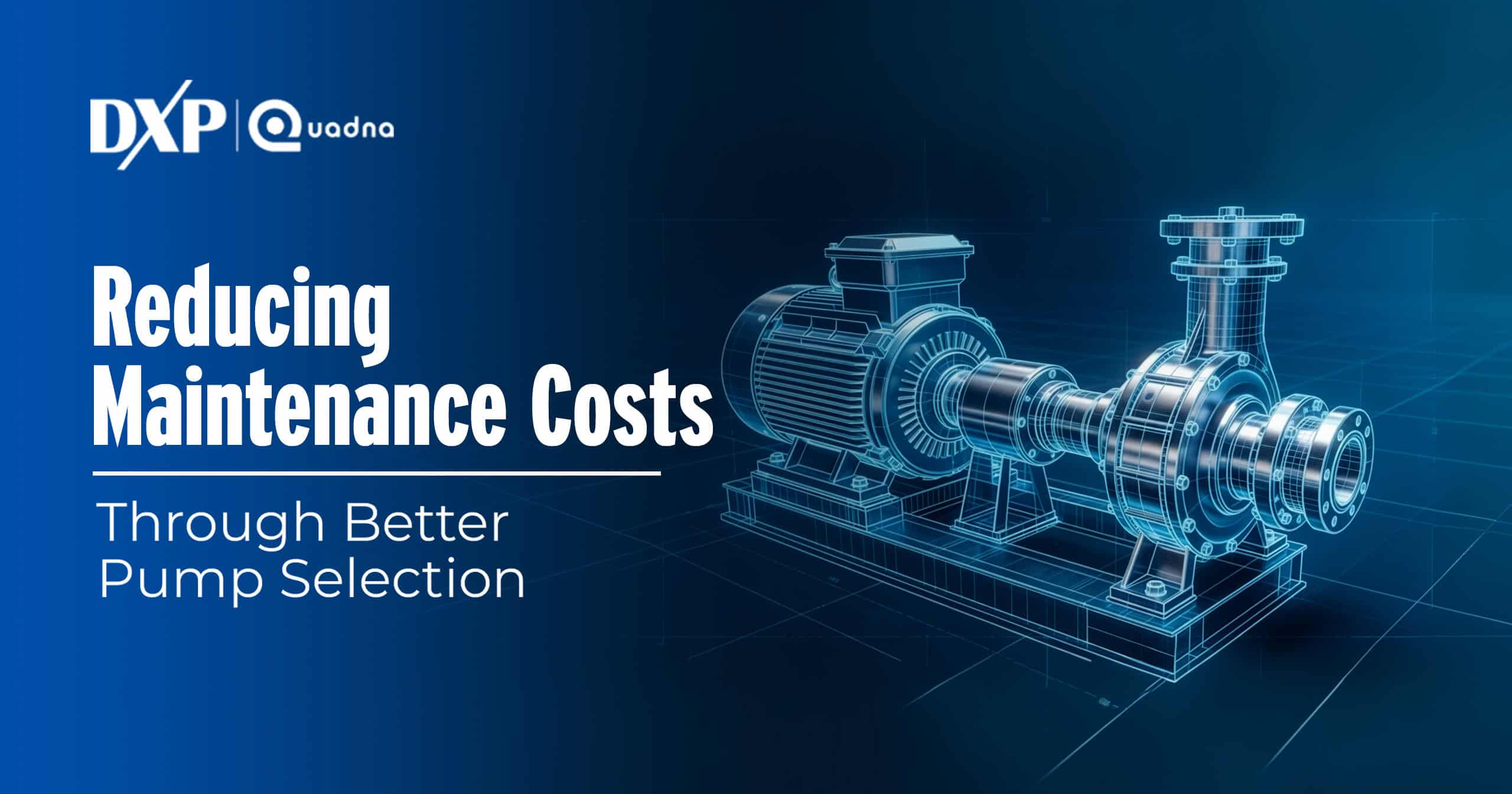
Maintenance costs are often viewed as an unavoidable part of operating industrial pump systems. While routine service will always be necessary, excessive repairs and recurring failures are frequently tied to one underlying issue: the pump was never properly matched to the application. When pump selection focuses only on initial purchase price or peak flow requirements, long-term maintenance demands often increase dramatically.
At DXP Arizona, pump selection is approached as a long-term reliability decision rather than a short-term equipment purchase. Matching pump design to actual operating conditions helps facilities reduce repair frequency, lower labor hours and improve overall system performance.
Why Improper Pump Selection Leads to Higher Costs
Pumps are designed to operate within a specific performance range. When a pump is forced to operate outside its intended conditions, mechanical stress increases and component life decreases. Oversized pumps are one of the most common examples. A pump selected for maximum theoretical demand may spend most of its life operating far from its best efficiency point.
This creates issues such as internal recirculation, excessive vibration and increased heat generation. Bearings, seals and couplings experience higher stress, leading to more frequent failures and unplanned maintenance.
Fluid characteristics also play a major role. Pumps handling abrasive slurries, corrosive chemicals or viscous fluids require specialized materials and hydraulic designs. Applying a standard pump in these environments often results in accelerated wear and repeated repairs.
Matching Pump Design to the Application
Reducing maintenance costs starts with understanding how the system actually operates. Flow demand, pressure conditions, fluid properties and duty cycles all influence pump selection.
For abrasive applications, wear-resistant materials and heavy-duty hydraulic passages help extend service life. In corrosive environments, selecting compatible materials and proper seal arrangements reduces degradation and leakage issues. Variable demand systems benefit from controls such as variable frequency drives that allow pumps to operate closer to their optimal efficiency range.
Pump configuration matters as well. Some applications are better suited for vertical pumps, while others require positive displacement or specialty designs. Choosing the correct type for the process helps minimize unnecessary stress on internal components.
The Impact on Labor and Downtime
Improperly selected or configured pumps do more than increase repair costs. They also consume valuable maintenance labor and create operational disruptions. Replacing seals, bearings or impellers repeatedly takes technicians away from other critical work and increases downtime risk.
When pumps are properly selected for the application, maintenance becomes more predictable. Components last longer, failures occur less frequently and maintenance teams can focus more on preventive tasks rather than emergency repairs.
Reducing downtime has an even greater impact in facilities where pump failures interrupt production or process stability. In these environments, avoiding unplanned outages often delivers greater savings than the repair cost itself.
Designing for Long-Term Reliability
Long-term reliability depends on more than selecting the right pump model. System layout, piping design and operating strategy all influence maintenance requirements over time.
Proper suction conditions help prevent cavitation in centrifugal pumps, while alignment and balancing reduce vibration-related wear in all pump types. Control systems that manage startup and shutdown conditions minimize hydraulic shock and mechanical stress. Integrating these considerations into the initial system design creates a more stable operating environment for the pump.
DXP Arizona works with facilities to evaluate the full application rather than focusing only on pump specifications. This approach helps identify design strategies that improve reliability across the entire system.
Investing in Smarter Pump Selection
The true cost of a pump extends far beyond the initial purchase price. Energy use, maintenance labor, replacement parts and downtime all contribute to total cost of ownership. Selecting the right pump from the beginning helps control these costs while supporting more reliable operation.
DXP Arizona provides application engineering, system analysis and field support to help customers select pump systems that align with real operating conditions. By focusing on long-term performance instead of short-term fixes, facilities can reduce maintenance costs and improve overall efficiency.
If your operation is dealing with recurring pump repairs or rising maintenance expenses, contact DXP Arizona to discuss pump selection strategies that improve reliability and reduce long-term costs.