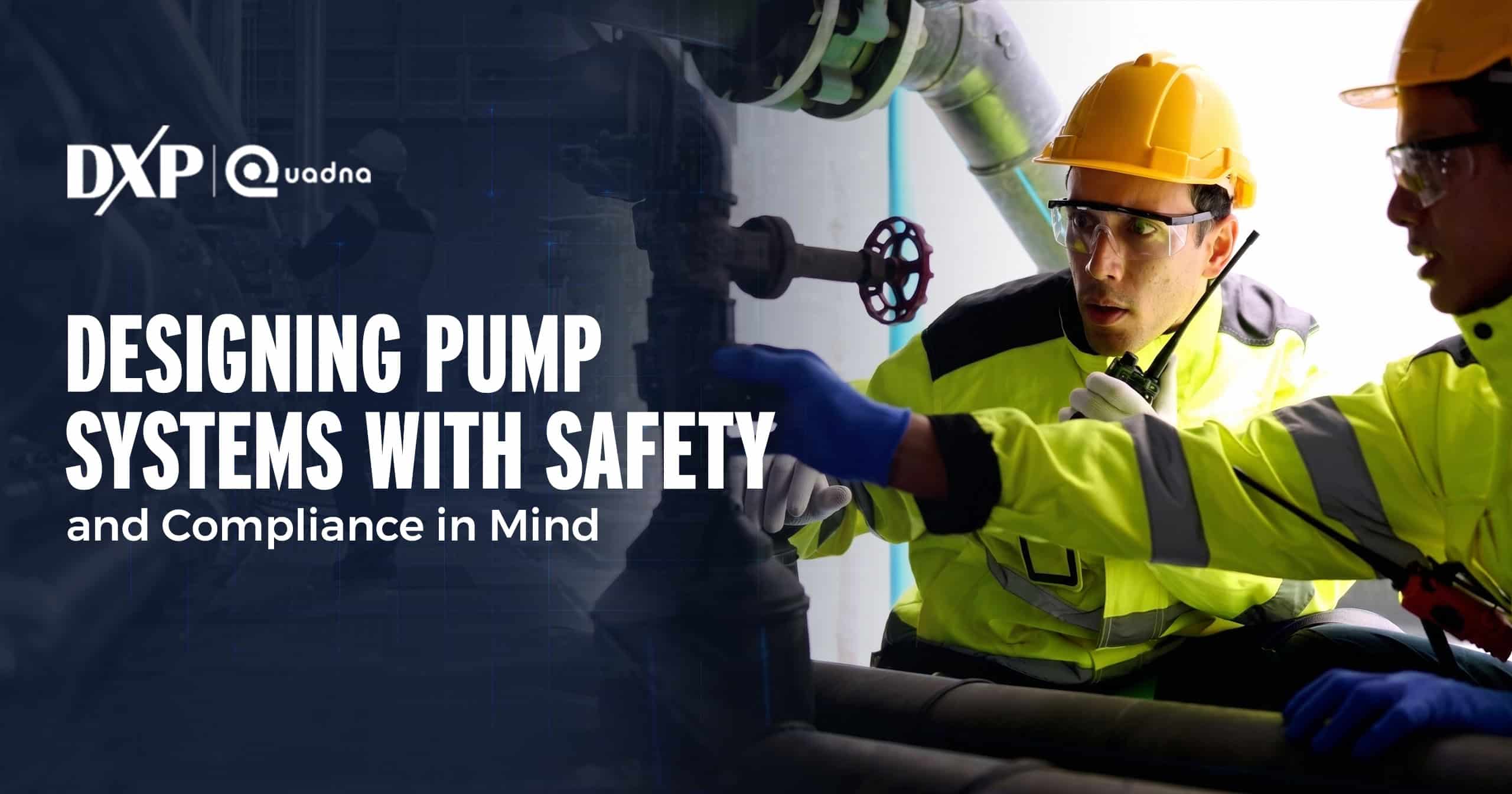
Pump systems often operate at the center of critical industrial processes. They move hazardous chemicals, handle high pressures and temperatures and support applications where failure can impact personnel, equipment and the surrounding environment. Because of this, safety and compliance must be built into pump system design from the very beginning.
At DXP Arizona, safety is not treated as an add-on or a final checklist item. It is integrated into every stage of system design, from equipment selection to controls and long-term maintenance planning. When safety and compliance are addressed early, systems operate more reliably and are better prepared to meet regulatory requirements.
Understanding Regulatory Considerations
Industrial pump systems are often subject to multiple layers of regulation depending on the application and location. Standards from organizations such as Occupational Safety and Health Administration (OSHA), Environmental Protection Agency (EPA) and American Petroleum Institute (API) influence how systems are designed, installed and maintained.
These regulations may address containment, emissions, worker exposure and equipment integrity. For example, systems handling volatile or hazardous fluids must meet strict requirements for leak prevention and monitoring. In wastewater or environmental applications, discharge and air quality standards also play a role in system design.
Rather than reacting to compliance requirements after installation, DXP Arizona works with customers to incorporate these considerations during the engineering phase. This approach reduces the risk of redesign, improves project timelines and helps ensure systems meet applicable standards from day one.
Designing for Hazardous Fluid Handling
Handling hazardous or aggressive fluids requires careful attention to materials, sealing and containment strategies. Fluid properties such as toxicity, flammability and corrosiveness all influence pump selection and system configuration.
Material compatibility is a critical starting point. Pump components must resist corrosion and maintain structural integrity under operating conditions. Seal selection is equally important. In many hazardous applications, dual mechanical seals or sealless designs are used to reduce the risk of leakage and protect both personnel and the environment.
System layout also contributes to safe operation. Proper ventilation, drainage and containment help manage accidental releases. Secondary containment systems and leak detection technologies provide an additional layer of protection in the event of a failure.
Integrating System Safeguards
Safety-focused pump systems rely on layered safeguards that prevent equipment damage and protect operators during abnormal conditions. These safeguards are built into both mechanical design and control systems.
Pressure relief devices help prevent over-pressurization, while interlocks ensure pumps do not operate under unsafe conditions such as closed valves or inadequate suction. Monitoring systems track vibration, temperature and pressure to identify developing issues early. When combined with automated shutdown logic, these systems help prevent minor issues from escalating into major incidents.
Control strategies also play an important role. Variable frequency drives allow for controlled startup and shutdown, reducing mechanical stress and minimizing hydraulic shock. Proper instrumentation ensures operators have clear visibility into system performance at all times.
Building Safety into Long-Term Operation
Designing for safety does not end at installation. Ongoing maintenance, inspection and training are essential to preserving safe operation over time. Systems must be maintained within their intended operating range, and personnel must understand how to respond to changing conditions.
DXP Arizona supports customers beyond the design phase through field service, system evaluations and reliability programs that help maintain compliance and performance. By combining engineering expertise with practical field experience, we help ensure that safety remains a consistent part of daily operation.
A Proactive Approach to Safer Systems
Pump system safety is not achieved through a single component or decision. It is the result of thoughtful engineering, proper material selection and integrated safeguards that work together as a complete system.
By designing pump systems with safety and compliance in mind, facilities reduce risk, improve reliability and create a safer working environment for their teams. If your operation is planning a new system or evaluating an existing one, contact DXP Arizona to discuss how a safety-focused design approach can support your goals.