Water management systems demand reliability, consistent performance and the ability to adjust to changing operating conditions. Whether the application involves municipal water supply, industrial wastewater treatment or agricultural irrigation, pump systems rarely operate at a single fixed duty point. Flow and pressure requirements often vary throughout the day, seasonally or based on process demand.
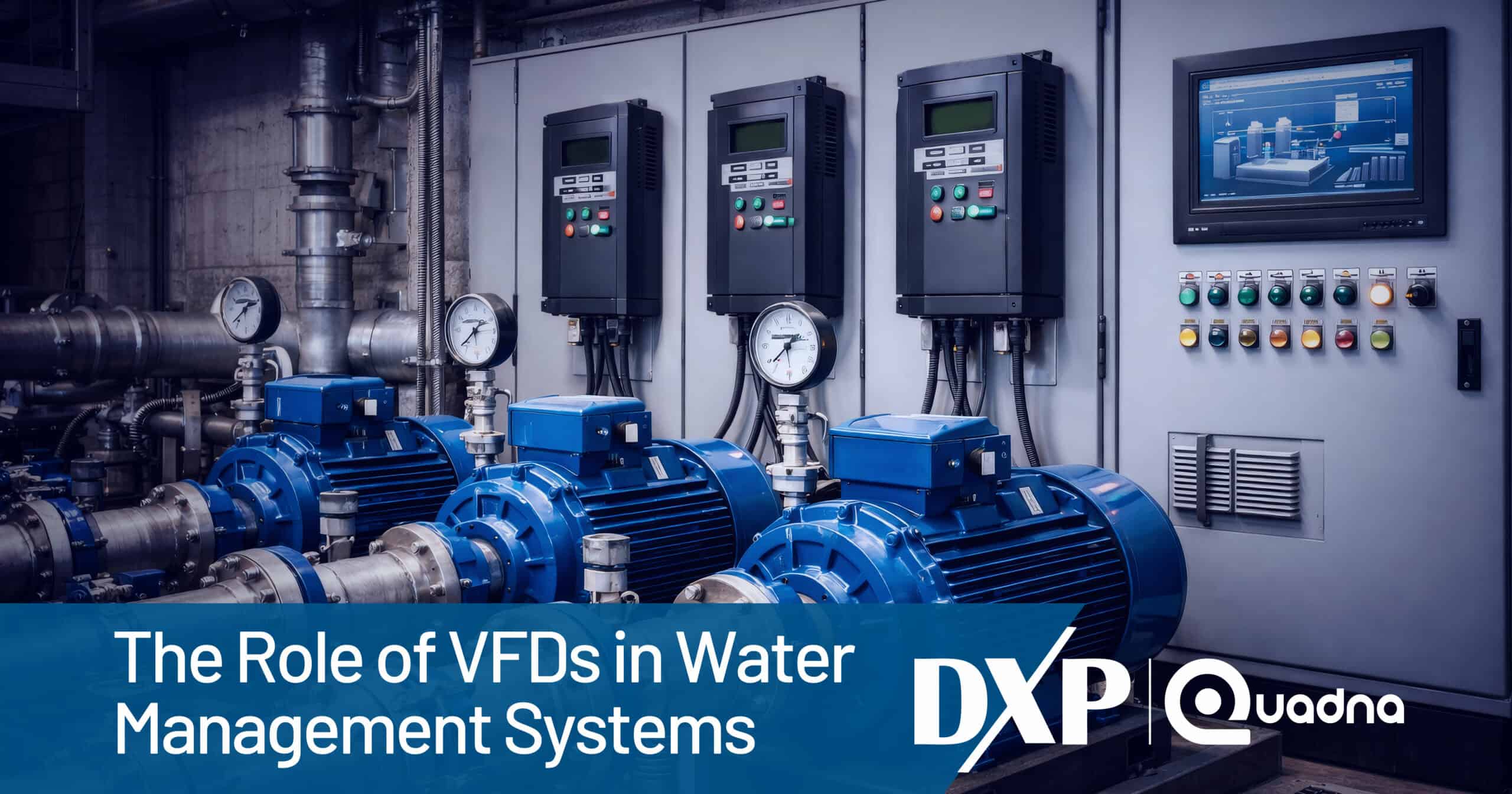
This is where variable frequency drives (VFDs) make a measurable difference. By adjusting pump motor speed to match real-time system requirements, VFDs enhance energy efficiency, reduce operating stress on equipment and offer more precise control than traditional throttling or bypass methods.
How VFDs Work in Pump Applications
A VFD controls the speed of an electric motor by varying the frequency and voltage supplied to it. Instead of running a pump at full speed continuously and adjusting output through valves or flow restrictions, the VFD allows the pump to operate only as hard as the application requires.
This approach aligns pump performance with actual system demand, reducing wasted energy and improving overall efficiency.
Energy Efficiency and Cost Reduction
Energy consumption is the largest lifetime cost in most pump systems, especially those that run continuously or near-continuously. A pump operating without speed control will consume the same amount of power regardless of flow demands. VFDs address this inefficiency directly.
According to the affinity laws, reducing pump speed by just 20% can cut power consumption by nearly 50%. This makes a VFD one of the most effective energy-saving tools in water management. Municipal facilities and industrial operators routinely report significant reductions in electricity bills after retrofitting pumps with VFD-driven control systems.
Additionally, utilities may qualify for energy incentive programs or rebates when adopting VFD technology. This can accelerate return on investment (ROI).
Process Control and System Stability
VFDs also provide enhanced process control. They allow pump systems to maintain required flow and pressure levels automatically—even as conditions shift. This is especially valuable in applications where:
- Demand fluctuates hourly or seasonally
- Maintaining consistent pressure is critical
- Water hammer or pipe stress is a concern
- Pump cycling leads to premature equipment wear
By soft-starting motors and gradually ramping speed, VFDs reduce hydraulic shock and mechanical stress during startup and shutdown. This leads to smoother operation, improved system stability and less wear on pipes, valves, seals and bearings.
Protecting Pump and System Components
Pumps running at fixed speeds often experience higher mechanical and thermal stress. VFDs mitigate these issues by:
- Reducing motor inrush current during startup
- Avoiding excessive system pressure spikes
- Maintaining optimal pump efficiency ranges
- Limiting vibration through speed adjustment
Long-term, this results in fewer unexpected failures and longer service intervals—supporting a lower total cost of ownership.
How DXP Quadna Supports VFD Integration
Integrating VFDs into a water management system requires evaluating pump curves, motor sizing, control logic and real-time process conditions. DXP Quadna assists clients with:
- System assessment and energy usage analysis
- Pump performance evaluations and curve matching
- Selection and sizing of VFDs for existing or new pump systems
- Control panel design and automation support
- Startup, testing, and operator training
Our team ensures the VFD, pump, and control system work together as a cohesive solution—not as isolated components.
A Smarter Approach to Water System Performance
As water infrastructure faces increasing efficiency, reliability and sustainability demands, VFDs have become a key tool for optimizing pump-driven processes. Their ability to reduce energy consumption, improve system stability and extend equipment life makes them an integral part of modern water management strategies.
DXP Quadna helps organizations implement smart pumping solutions that meet today’s performance requirements while preparing for tomorrow’s challenges. Contact us today to learn more about how we can help you implement VFDs and other technology solutions for more efficient pump systems.